"Are you sure you know the way?" she asked me.
I stood in thought. This was one of the big mysteries of the adult brain — or so I thought — beyond yes and no. Shortly before, she had asked me if I knew the way to room 88. I did know the way, and at (I guess) age 12 or so, that was all there was, so I said so:
"Sure? You asked me if I knew the way, and I said yes. That's all there is. I know, or I don't know. I don't know anything about 'sure'."
She gave me one of those long, faraway stares that adults do when you give them an answer that bears no relation to the expected "yes" or "no". Scratch that – one of those looks that everyone gives me all the time. As far as I was concerned, she started it, by going beyond "yes" or "no" in the first place.
"So you're not so sure, huh?" I used to think this was trying to convince the child he must be in the wrong because he's a child. I have sometimes caught myself doing that to my own children, so other people must do it too, right? Sometimes though, I think it's just taking refuge in a familiar place: the child is getting pedantic, so he must be trying to distract from his lack of certainty.
***
"Are you sure you won't have another biscuit?"
I know that one mustn't get snippy with well-meaning elderly aunts. Although I still find this one a trial, I at least know what I'm supposed to do here. Aged 8 or 9 this time, the utterly baffling back-and-forth over who should do what for whom was a source of annoyance when I had to observe it in others and of acute personal discomfort when I got caught up in it myself.
***
It wasn't until I had children of my own that I learn just how relative yes and no really are. To children, the parent's "no" means something like "not until next time you ask me" or in worse cases "go ask your other parent". Similarly, the child's "yes" when asked anything along the lines of "have you done what you know you were supposed to do" really means "what kind of trouble will I get into if you find out the real answer is no?"
We paint ourselves a comforting fiction that a simple "yes" or "no" is equivalent to "done" and "not done" (to borrow from T H White) - that it can only mean one thing. And yet we know that when the kids in the back seat say "are we nearly there yet" that for a long time the answer will be "no", but at some point it will magically become "yes", even though the question and the conditions under which it is asked are unchanged. It is a short leap from this to asking for an icecream every thirty seconds.
Those negotiations over biscuits, those demands of sureness, are rather clumsy ways of getting past the artificial barrier of "yes" and "no", and through to real desires and the reliability of knowledge. Had I know that, I would have known that the proper response to "are you sure you know the way" was:
"I know the route seems a little convoluted, but I have to come here at least once every day."
I would also have known that the best reply over the biscuits was to get out of trouble by not answering the question but making a general statement:
"I won't have another biscuit."
or, more politely:
"I've had enough to eat, thanks."
***
Edward de Bono wrote a short book that I can strongly recommend called "beyond yes and no". He is dealing with the perpendicular issue of how yes and no often result in an attempt at a preconfigured solution to every problem, rather than what he recommends, which is to apply a general approach, which he calls "policy" or simply "P".
Insisting to ourselves on the sanctity of yes and no is to try to penetrate other people's thoughts by separating the cream from the coffee. What we know about what goes on inside others' heads is not polar. This is mostly because what we know, and what others know, is not clear, or certain. I am convinced that we cannot be "sure". However this doesn't invalidate yes, no, nor the question "are you sure". These are tools used in a process by which we discover what other people think they know, and then decide how reliable that knowledge is.
From this point of view, a simple iterative process enables you to decide whether to follow the (rather pompous) 12 year old schoolboy through the labyrinthine corridors of the Victorian school building.
You observe his demeanour when you ask "do you know the way?". Realizing that he is likely to have learned to appear confident in every response, you decide to dig a little further than his forthright "yes". You'd be smart to do better than "are you sure?" though. You could attempt "how do you know?" or even "why are you sure?". Anything to provoke a further response that is on topic. You'll respond to the tone, the body language, as much as to the words themselves. (After all, I could be lying about going there every day.) And then, according to your confidence or otherwise you'll either declaim "lay-on, MacDuff" or wander off in search of some other insufferable, spotty, floppy-haired public schoolboy.
***
"Answer the question, yes or no!"
This is always a ruse. Sometimes the answer isn't "yes" and it isn't "no". If so, stick to your guns. Insist. Give the real answer.

2011-10-18
Off Topic #2: Design
Following on from yesterday's not really off-topic post, here is another one, even less off topic, though perhaps seeming more so…
Design is dead.
 Time there was, in production fabrication and construction, the designer was the single most important contributor to development. Today, few people even understand what, back in their heyday in the nineteenth century, designers actually did, and when I point out exemplary pieces of period design, many folks will comment "Oh yes, there's lots of design on that".
Somehow, design has come to mean "adding the pretty, nonfunctional details". Movements like Bauhaus are partly to blame. Bauhaus elevated design to an art form, but what made Bauhaus so aesthetically and ergonomically pleasing was its concentration on the principles that drove C18 and C19 engineering - the key being design. In the C19, design was the careful balance of functional requirements at all stages of the life-cycle of a product. The designer would, when deciding what his product would look like, take account of materials and their cost and availability, the cost, time and skill required for fabrication, the required durability, the costs of future maintenance, the necessity of future-proofing or backwards-compatibility (a couple of ideas that, under a variety of names, have been know since at least ancient Rome). The skill of some designers as the end of the nineteenth century approached was so great that they could afford to build-in beauty as a concomitant feature. In many areas of engineering, this idea continued through to the 1950s, and such visually divergent designs as Scotsman and Mallard…

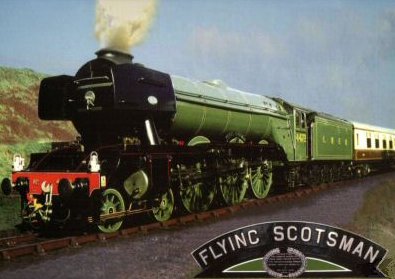
… which solve similar practical problems but with strikingly different visual consequences. Both are beautiful, because their beauty goes so much further than external prettiness.
The high profile and high public approval of these kinds of design, combined with Bauhaus (and its imitators) elevation of aesthetics – or perhaps the elevation of Bauhaus by the popular press – resulted in a separation between the visual appearance of a product and its engineered function. Creative people with little or no knowledge of manufacture were brought in to "design" products to make them pleasing to the eye, popular, fashionable. These "designs" were then passed on to fabricators whose job was to find a way to manufacture something that looked like the designs.
This is how things are today. The real skill of fabrication is working out how to make something. Wherever this is understood, there are no designers at all; engineers invent, plan and build. The results seldom meet needs even when they meet requirements. (You know who you are.) Wherever there are designers, the engineers are woefully undervalued. Beauty has been divorced from function – indeed one often hears the two being described as in conflict: "a triumph of form over function" … "plain practicality".
To the engineers of the nineteenth century, as much as to the public who used their products, any design that solved a problem efficiently was inherently beautiful, and the satisfaction that they derived from the inherent beauty of a good solution, gave them the confidence to draw the bold flowing curves of the Mallard, and put Greek and Roman column capitals on gasometers.
In creative writing, design is seen by many as a sort of sell-out, betrayal or even circumvention of the artistic process. I have encountered this attitude as much in commercial writing as in novel writing. Setting aside marketing copy, novel writing is not, as many authors think, storytelling.
It has been accurately stated that the written word is the worst thing ever to happen to storytelling. Storytelling truly is an organic, creative, social process. When you tell a story to an audience, the audience responds to you and you to them. The story changes as it enters the imaginative space between you and your audience, and is different at each telling. Those of your audience whose imagination is captivated, will pass on your story to others, and it will change for them just as it changed for you.
When you write it down, it is the same every time you read it.
This gives you a problem to solve. How to tell the story that you want to tell, how to reach your audience when you don't have their reactions and you don't even know who they are? When you have a problem to solve, there is value in having a design. How far you take it is up to you – and is probably a function of your knowledge and experience. I suspect that many authors write as if they were telling a story with themselves as audience – which would explain the common observation by the author that the story took unexpected twists and turns, and that characters appeared, developed and evolved in unanticipated ways.
This stage is the discovery of the story. In storytelling, you discover the story either by being told it, or by telling it to yourself. Once you know your story, the practical problem to which you must return is "how to tell it using the written word". Most authors apply an iterative design process. Drafting and redrafting. Many authors involve third parties like beta-readers, proofreaders and editors (each of these has a different purpose and they should be selected to match your design process. Not every author can benefit from a literary editor). I guess the big advantage of novel writing is the possibility of design-after-the-fact. (I nearly said that in Latin, but I suspect that italics and hyphens is going to reach a larger audience.) Once you know the story, and have tried it out a few times, you can have several gos at writing it. My client, new writer Damon Courtney, has just sent me a redraft where he has made very substantial changes to the book, in structure, character dynamics, setting - even the outcome of major events (a party that had been planned then cancelled in the previous draft actually takes place in the new draft). The new draft is nonetheless the same story. But Damon has redesigned the way it is told to better match the medium: the written word.
The differences between "The Resurrection of Deacon Shader" and the rewriting "Shader: Cadman's Gambit" and "Shader: Best Laid Plans" are more than substantial. It's more a case of a few passages and characters from Resurrection being re-used in a new book. New book, same story.
If you are already a great author, chances are you probably ought to carry on doing whatever it is you do. If you want to become a great author, designing a book is complex and difficult. But worth it.
Design is dead.
Time there was, in production fabrication and construction, the designer was the single most important contributor to development. Today, few people even understand what, back in their heyday in the nineteenth century, designers actually did, and when I point out exemplary pieces of period design, many folks will comment "Oh yes, there's lots of design on that".Somehow, design has come to mean "adding the pretty, nonfunctional details". Movements like Bauhaus are partly to blame. Bauhaus elevated design to an art form, but what made Bauhaus so aesthetically and ergonomically pleasing was its concentration on the principles that drove C18 and C19 engineering - the key being design. In the C19, design was the careful balance of functional requirements at all stages of the life-cycle of a product. The designer would, when deciding what his product would look like, take account of materials and their cost and availability, the cost, time and skill required for fabrication, the required durability, the costs of future maintenance, the necessity of future-proofing or backwards-compatibility (a couple of ideas that, under a variety of names, have been know since at least ancient Rome). The skill of some designers as the end of the nineteenth century approached was so great that they could afford to build-in beauty as a concomitant feature. In many areas of engineering, this idea continued through to the 1950s, and such visually divergent designs as Scotsman and Mallard…
… which solve similar practical problems but with strikingly different visual consequences. Both are beautiful, because their beauty goes so much further than external prettiness.
The high profile and high public approval of these kinds of design, combined with Bauhaus (and its imitators) elevation of aesthetics – or perhaps the elevation of Bauhaus by the popular press – resulted in a separation between the visual appearance of a product and its engineered function. Creative people with little or no knowledge of manufacture were brought in to "design" products to make them pleasing to the eye, popular, fashionable. These "designs" were then passed on to fabricators whose job was to find a way to manufacture something that looked like the designs.
This is how things are today. The real skill of fabrication is working out how to make something. Wherever this is understood, there are no designers at all; engineers invent, plan and build. The results seldom meet needs even when they meet requirements. (You know who you are.) Wherever there are designers, the engineers are woefully undervalued. Beauty has been divorced from function – indeed one often hears the two being described as in conflict: "a triumph of form over function" … "plain practicality".
To the engineers of the nineteenth century, as much as to the public who used their products, any design that solved a problem efficiently was inherently beautiful, and the satisfaction that they derived from the inherent beauty of a good solution, gave them the confidence to draw the bold flowing curves of the Mallard, and put Greek and Roman column capitals on gasometers.
In creative writing, design is seen by many as a sort of sell-out, betrayal or even circumvention of the artistic process. I have encountered this attitude as much in commercial writing as in novel writing. Setting aside marketing copy, novel writing is not, as many authors think, storytelling.
It has been accurately stated that the written word is the worst thing ever to happen to storytelling. Storytelling truly is an organic, creative, social process. When you tell a story to an audience, the audience responds to you and you to them. The story changes as it enters the imaginative space between you and your audience, and is different at each telling. Those of your audience whose imagination is captivated, will pass on your story to others, and it will change for them just as it changed for you.
When you write it down, it is the same every time you read it.
This gives you a problem to solve. How to tell the story that you want to tell, how to reach your audience when you don't have their reactions and you don't even know who they are? When you have a problem to solve, there is value in having a design. How far you take it is up to you – and is probably a function of your knowledge and experience. I suspect that many authors write as if they were telling a story with themselves as audience – which would explain the common observation by the author that the story took unexpected twists and turns, and that characters appeared, developed and evolved in unanticipated ways.
This stage is the discovery of the story. In storytelling, you discover the story either by being told it, or by telling it to yourself. Once you know your story, the practical problem to which you must return is "how to tell it using the written word". Most authors apply an iterative design process. Drafting and redrafting. Many authors involve third parties like beta-readers, proofreaders and editors (each of these has a different purpose and they should be selected to match your design process. Not every author can benefit from a literary editor). I guess the big advantage of novel writing is the possibility of design-after-the-fact. (I nearly said that in Latin, but I suspect that italics and hyphens is going to reach a larger audience.) Once you know the story, and have tried it out a few times, you can have several gos at writing it. My client, new writer Damon Courtney, has just sent me a redraft where he has made very substantial changes to the book, in structure, character dynamics, setting - even the outcome of major events (a party that had been planned then cancelled in the previous draft actually takes place in the new draft). The new draft is nonetheless the same story. But Damon has redesigned the way it is told to better match the medium: the written word.
The differences between "The Resurrection of Deacon Shader" and the rewriting "Shader: Cadman's Gambit" and "Shader: Best Laid Plans" are more than substantial. It's more a case of a few passages and characters from Resurrection being re-used in a new book. New book, same story.
If you are already a great author, chances are you probably ought to carry on doing whatever it is you do. If you want to become a great author, designing a book is complex and difficult. But worth it.
2011-10-17
Off Topic #1
If you follow me on Twitter you will have realized that the Winter Veg season has started in earnest. Last week's basket from the AMAP included black radishes which are delicious raw, baked, deep fried, pan fried, in soup, stuffing or made into condiment. I went for soup, as follows:
1 large black radish
2 large potatoes
2 small onions or 3-4 shallots
2 saucisses à cuire
salt, paprika, cayenne pepper, cumin seed
Serves four hungry people or two Russian peasants. Enough for about 6 middle-class English dinner guests.
Chop the shallots into small slices and put them in a hot frying pan with about 2 teaspoonfuls of lard (I prefer mixed lard for this but you can use fatback or caul). My lard is unbleached, untreated and comes from a local farm that has its own butchery. In general I advise getting your lard direct from the butcher or preparing it yourself.
Peel the radish and potatoes, and chop the potatoes into chunks and the radish into thinnish slices. As the shallots start to brown, add the potatoes and radishes, about a teaspoonful of paprika, a pinch of cayenne and a dozen or so cumin seeds. Keep the pan good and hot, and toss frequently.
While it is cooking, heat up a litre or two of water with about half a teaspoon of salt, slice up the sausage and drop it in the water. Let it come to the boil. (It helps if you have already had the sausage before, so you know how salty it is. This can vary quite a lot. With the saltier ones, there is no need to salt the water.
Once the potatoes and radishes start to brown, tip the entire contents of the frying pan in the boiling water. De-glaze the frying pan with about half a glass of red wine. (One the pan is empty, get it good and hot, and tip half a glass of red wine into it. It will boil instantly, and spit a little at first. Swirl it around so it cleans the pan.) Tip the remaining contents of the frying pan into the boiling water. You may need to scrape a little with a wooden spatula. I don't usually drink the last 3cm of any bottle of red. Instead I pour it into a bottle that I keep for the purpose, which is now a horrifying mixture of old wine. This is the best stuff for deglazing, or as a base for an instant marinade, or to add body to any braised dish.
Boil the lot for about 20 minutes.
Separate out all but 2 or three slices of sausage, and re-fry them in the same pan. While you are doing this, put the rest in the blender and blend it until smooth and creamy (your guests may even think there is cream in the soup. This is part of the magic of lard, even in tiny quantities). If you need to add water to make it blend well, then do. It will probably be too thick at this stage anyway. Once the sausage starts to brown, put it back in with the soup. De-glaze again, but this time use less wine. About a quarter glass topped up to half way with water - or you could use Beaujolais. All it's good for IMO.
With a steady heat on, add a little pre-boiled water from the kettle until you get the consistency you want. I advice tasting it to judge the consistency, rather than just going on the stirring resistance.
Here's my top soup serving tip: if you're worried you haven't made enough, serve it too hot to eat with a spoon but with lots of crusty bread. Your diners will fill up with bread dipped in soup. In any case the radish will still be quite lively if you haven't cooked it too long.
Like any proper winter soup, this is very filling. Also like any proper winter soup you can make it with any damn vegetable. I did another this week with parsnip and salsify. The latter takes a little more preparation. I daresay I'll rave about salsify some time soon.
Subscribe to:
Posts (Atom)