Traditional grammar divides verbs into two categories:
those which take a direct object, and those which do not
I fed the dog
I beat the drum
This distinction is used as a means of identifying transitivity. Transitivity is how an action expressed through a verb affects or changes the object of the verb. Traditional grammar sees two types of verb: those like feed and beat, which act directly on the object, and those like talk, play which require a preposition.
So the presence of a preposition is often cited as an indication of intransitivity. Intransitive verbs have two properties that are common across most languages:
The verb can be used without an object:
We talked for hours.
The verb requires a preposition to indicate its relation to the object:
She likes to play with tin soldiers.
So far so simple. But English loves to do deviant things with prepositions. Consider the verb put.
In normal usage, put requires two objects, one direct, one indirect; consider that we cannot say:
I put on the table.
Any more than we can say:
I put the plates.
To give put its proper meaning, we have to say:
I put the plates on the table.
Grammarians deal with this using an idea called valency - it turns out that there are quite a number of verbs that require more than one object, as well as some that don't require a subject - though apparently English isn't the worst offender.
So let's take put and put it with English's famous prepositions, to get the verb put up with, which means tolerate.
We can't use it without an object, any more than we can use tolerate without an object.
Mr Churchill famously said that he wouldn't tolerate
Is clearly as nonsensical as:
Mr Churchill famously said that he wouldn't put up with.
So give it an object ( a nice complicated gerund clause ):
Mr Churchill famously said that he wouldn't put up with being invaded by the Nazis.
To people who learned grammar in a language other than English, the verb in the above sentence seems to be "put", and it seems to need two prepositions before the object, so "put" must be a verb meaning "tolerate" or "allow", and it must be intransitive. But it isn't. It has a structure that looks intransitive but a meaning that is transitive, because the bare infinitive is not "put", but "put up with".
Just to make it even more fun, while most prepositional verbs formed from "put" are similarly transitive, some are not, for instance, I put one over on him means I convinced him of a falsehood; the verb is "put one over", not "put one over on". Can I prove it?
I put one over when I need to
Conveys the same meaning of communicating a falsehood, though this usage is uncommon.
Of course, it doesn't stop there. English has verbs that can fall into either category, depending on what kind of thing the object is. For instance, the verb communicate is dependant on whether the object is abstract or concrete.
I communicate ideas well
(I hope), but:
I also communicate well with people.
In romance languages there is a strong sense for the way in which the action of a verb modifies the object, and this makes it possible in some languages to guess the transitivity. When telephones began to become commonplace in Italy, no Italian would ever have thought of using telefonare transitively, because the action is not of doing something to something, but doing something towards.
Telefono a mia mamma implies "using the telephone, I talk with my mother"
Telefono mia mamma if it could exist, would seem to be implying some sort of action performed on my mother. Possibly with a dial or keypad.
In English, which I increasingly feel is the language of ablatives, you can form a verb from any noun whose usual role in the sentence is one of being used as a tool (hence ablative).
Using the flatiron, I press my trousers
Has become:
I iron my trousers.
By the same route,
Using the telephone, I speak to my mum,
Has become:
I 'phone my mum.
Just to push the whole thing to ridiculous extremes, can you identify the transitivity in the sentence:
I beat out a crazy rhythm on the bongos,
and if so, can you identify the verb?

2012-07-22
English Grammar: a contradiction in terms. #1: past tenses
This is a new series where I will give examples of standard English that are ungrammatical. I'm not talking about idiom, nor about those exceptions that escape the rules. These will not be obscure, nor exceptional, just correct English that is grammatical nonsense.
A particular feature of English tenses is that any action, past, present or future, can be either completed or continuous (the terms usually used when talking about English; you will understand why, I hope, by the time I've finished). When talking about other languages, or about language in general, grammarians use the terms perfect and imperfect.
Etymologically, the word perfect just means "entirely completed" or "fully made". This is the sense in which it is used in grammar. A perfect action is one that is wholly completed:
"Mr Glover made a pair of gloves, then went to bed."
("Mr. Gantier fabriqua un pair de gants, puis se coucha." - because this sounds like a line from a story, the passé simple seems required, though we could say: "Mr Gantier a fabriqué un pair de gants, puis s'est couché.")
An imperfect action is one that was, is, or will be ongoing, uncompleted or unfinished.
"For most of his life, Mr Glover made gloves."
("Durant la plupart de sa vie, Mr. Gantier fabriquait des gants.")
You will notice that while in English the form of the verb is the same ("made"), in French it is fabriquait instead of a fabriqué.
But, because Grammar likes to try to describe both the meaning and the form of the word at the same time, in French we have the perfect tenses:
Il tua [le rat] - past historic again, but never mind; as soon as we read the verb we can identify its tense.
Il tuait [les rats pour ganger sa vie] - imperfect this time, and again the tense of the verb readily identified without a need for the rest of the sentence. Here's the same again in English:
He killed …
He killed …
Anyone care to guess which is which?
A Grammarian would say: we use the same construction in English to indicate a perfect and an imperfect tense. The Frenchman, to his inevitable chagrin, must determine the tense of the verb from the meaning of the entire sentence.
Grammar likes to pretend that verbs have tenses, because in most of the languages known to grammar, the tense is communicated by inflections (changes in sounds, like vowel switching or ending changes) or by the presence of auxiliaries (small words that affect the meaning of the verb). But English neatly demonstrates that it is sentences that have tenses, and that some languages use the verb to communicate them.
Even in Classical Latin, where the verb is King, so much convoluted fun can be had with tenses that at times, it is the paragraph, or the entire text, that has tense. But in simple SOV* statements in Latin, the verb and only the verb communicates tense, which is I believe the cause of modern grammar's mistaken assertion that tense is the province of verbs. Verbs deal with actions, but at best contribute to our understanding of tense.
In English, therefore, we avoid the terms "perfect" and "imperfect", and hope to teach the student to recognize when a sentence is describing a completed action or a continuous action. And possibly use exactly the same construction regardless.
Consider:
"I died. Every day for a year, I died. You might say it was my purpose or profession. But at last, at the year's end, I did it again, but this time, one final time, I died for good and all."
I daresay you can come up with better examples of confusion between tenses. I contend that in this particular four sentence statement, the tense is a narrative past. This is a special tense we have in English where all is forgiven by the reader as soon as he realizes that what happens is happening in the past.
____
* This would normaly be Subject Verb Object, but Classical Latin likes to place the verb in a position of honour, at the end of the sentence.
A particular feature of English tenses is that any action, past, present or future, can be either completed or continuous (the terms usually used when talking about English; you will understand why, I hope, by the time I've finished). When talking about other languages, or about language in general, grammarians use the terms perfect and imperfect.
"Mr Glover made a pair of gloves, then went to bed."
("Mr. Gantier fabriqua un pair de gants, puis se coucha." - because this sounds like a line from a story, the passé simple seems required, though we could say: "Mr Gantier a fabriqué un pair de gants, puis s'est couché.")
"For most of his life, Mr Glover made gloves."
("Durant la plupart de sa vie, Mr. Gantier fabriquait des gants.")
You will notice that while in English the form of the verb is the same ("made"), in French it is fabriquait instead of a fabriqué.
But, because Grammar likes to try to describe both the meaning and the form of the word at the same time, in French we have the perfect tenses:
- passé simple (past historic)
- passé composé (past perfect)
- imparfait (imperfect or past continuous)
- simple past ("He killed a rat .")
- past imperfect ("He killed rats for a living.")
- past continuous ("He used to be a ratcatcher.")
Il tua [le rat] - past historic again, but never mind; as soon as we read the verb we can identify its tense.
Il tuait [les rats pour ganger sa vie] - imperfect this time, and again the tense of the verb readily identified without a need for the rest of the sentence. Here's the same again in English:
He killed …
He killed …
Anyone care to guess which is which?
A Grammarian would say: we use the same construction in English to indicate a perfect and an imperfect tense. The Frenchman, to his inevitable chagrin, must determine the tense of the verb from the meaning of the entire sentence.
Grammar likes to pretend that verbs have tenses, because in most of the languages known to grammar, the tense is communicated by inflections (changes in sounds, like vowel switching or ending changes) or by the presence of auxiliaries (small words that affect the meaning of the verb). But English neatly demonstrates that it is sentences that have tenses, and that some languages use the verb to communicate them.
Even in Classical Latin, where the verb is King, so much convoluted fun can be had with tenses that at times, it is the paragraph, or the entire text, that has tense. But in simple SOV* statements in Latin, the verb and only the verb communicates tense, which is I believe the cause of modern grammar's mistaken assertion that tense is the province of verbs. Verbs deal with actions, but at best contribute to our understanding of tense.
In English, therefore, we avoid the terms "perfect" and "imperfect", and hope to teach the student to recognize when a sentence is describing a completed action or a continuous action. And possibly use exactly the same construction regardless.
Consider:
"I died. Every day for a year, I died. You might say it was my purpose or profession. But at last, at the year's end, I did it again, but this time, one final time, I died for good and all."
I daresay you can come up with better examples of confusion between tenses. I contend that in this particular four sentence statement, the tense is a narrative past. This is a special tense we have in English where all is forgiven by the reader as soon as he realizes that what happens is happening in the past.
____
* This would normaly be Subject Verb Object, but Classical Latin likes to place the verb in a position of honour, at the end of the sentence.
2012-07-12
Dogs and Dragons
Regular readers will know that my editing blog occasionally hosts sociological or political rants that are then tenuously connected with something to do with writing. This is one such post.
The frankly bizarre case of Lennox the Dog has caused some considerable upset, and rightly so. I confess I really didn't think that the British or the Irish would stand for such a thing, and indeed an awful lot of them protested very strongly, and many took all sorts of action to seek a solution that would not result in the killing of a family pet.
I don't wish to speculate on the storm of incompetence, arse-covering, buck-passing and blinkered jobsworthing that must have been behind it.
I do, however, have some thoughts about Breed Specific Legislation (BSL). Lennox is, technically, a victim of BSL. BSL is rife in the UK and in the USA, and in both countries it is imposed variously, at both local and national levels. When you move to a new town with your family and the authorities tell you your dog can't come along, it feels like racism. Why is that?
 Supposing you strike a pedestrian with your car at 30mph (50kph) you are most unlikely to kill them, and somewhat unlikely to cause serious harm. The same is not true at 60mph.
If a dog is raised to be fearful and aggressive, and it is a cairn terrier, when it attacks you, assuming it catches you, it might well draw a little blood. If it is a doberman*, it will chase you down and kill you.
Just as a gun is not dangerous unless there is a dangerous and stupid person to pull the trigger. So you deprive dangerous and stupid people (that's pretty much all of us) by controlling the availability of guns. If dogs raised by dangerous, stupid, aggressive people become dangerous themselves, surely it is better that such people cannot acquire dogs that have the physical characteristics necessary to kill you (size, speed and strength). So why are dogs a special case?
Guns are intended to be dangerous. Cars can be dangerous if adequate care is not taken. Dogs must be made dangerous on purpose. It follows that the person who owns a dangerous dog is himself dangerous, not to mention cruel. I put it to you that a person who owns a dangerous dog who is not dangerous and cruel will attempt to improve the dog's temperament and failing that have it humanely destroyed**.
BSL, therefore, does arbitrary harm to dogs and the families that own them without addressing the issue of the people that create dangerous dogs in the first place. Only legislation that discriminates on size could deprive the dangerous people of potentially dangerous dogs. But this isn't about the dogs. The dog just happens to be the weapon of choice, but deprive dangerous and cruel people of one weapon, and they'll find another. Weapons are pretty easy to improvise.
There is another reason why dogs are a special case. It is that we have coexisted with them probably since we first started forming social groupings. Dogs are part of our families and part of our society. There is growing evidence that human and canine cognition coevolved*** — that dogs created us almost as much as we created them. If you grew up with dogs and have ever lived for a while without one, you will know what I mean when I say that I feel handicapped if I don't have a dog.
So a person's dog can tell you a lot about the person. And if the person's dog is dangerous, unpredictable, fearful and aggressive, that should tell you that the person at the very least needs therapy, and at worst needs to be in a secure unit.
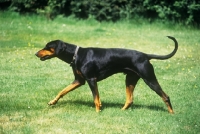 Which by a very roundabout and tenuous root brings me to the shortage of dogs in literature. Everone can tell you about Jack London. London often makes the dog, and it's relationship with people, central to the story. I prefer (when showing examples of the relationship of dogs with human society) Laurens Van der Post, who in both fiction and non-fiction never fails to mention the presence and role of dogs; he is strongly aware of their importance.
I frequently feel their absence in both historical novels and in fantasy, even more than in books with a more modern setting. Until about 1900, living without a dog was unthinkable for most people. Dogs variously belong to individuals, to families, to tribes or villages, to noone, but they are always there, and they are usually part of us. Throughout the middle ages a dog was a necessity.
Which makes it all the more odd that they are so often absent from fantasy, which usually has a medieval setting of some kind, and indeed equally odd that they are absent from post-apocalyptics. I for one wouldn't even begin to consider trying to survive a Zombie Apocalypse without a dog or two.
 A number of recent fantasy books have, to a certain extent, redressed this, by replacing the man-dog relationship of the main protagonist with a man-dragon relationship. I guess the dragon as a fantasy dog is not a big stretch. Are there others?
In any case, read London, read Van der Post ("Story Like the Wind" is the place to start), and remember that dogs are only domesticated in that we and they became domestic at about the same time in our shared histories. Remember that our species includes theirs.
___
* the doberman is a scary dog, right? Dobermans that are raised as guard dogs have their tails and ears docked. Dogs use their tail and ears for visual communication at medium distance. A dog that has had them cut short cannot clearly indicate his intentions either to people or to other dogs. As a result, everyone it meets is nervous of it. This makes the dog unpredictable and aggressive, because it is afraid of all those people and dogs who are nervous of it. In short, the dog's ability to communicate is handicapped as a quick and easy way to make the dog more aggressive and frightening.
Dobermans raised unmutilated are kind, friendly and playful. I once spent a whole afternoon playing with a pair of them on a beach in Cornwall. One of them seemed to be deliberately clowning, by walking through the shallow surf like a dressage pony, provoking gales of laughter.
** I have no objection to the term 'euthenased' being applied to dogs. It just isn't the first vocabulary that occurs to me.
*** Google: anthropology and dogs
The frankly bizarre case of Lennox the Dog has caused some considerable upset, and rightly so. I confess I really didn't think that the British or the Irish would stand for such a thing, and indeed an awful lot of them protested very strongly, and many took all sorts of action to seek a solution that would not result in the killing of a family pet.
I don't wish to speculate on the storm of incompetence, arse-covering, buck-passing and blinkered jobsworthing that must have been behind it.
I do, however, have some thoughts about Breed Specific Legislation (BSL). Lennox is, technically, a victim of BSL. BSL is rife in the UK and in the USA, and in both countries it is imposed variously, at both local and national levels. When you move to a new town with your family and the authorities tell you your dog can't come along, it feels like racism. Why is that?
Supposing you strike a pedestrian with your car at 30mph (50kph) you are most unlikely to kill them, and somewhat unlikely to cause serious harm. The same is not true at 60mph.If a dog is raised to be fearful and aggressive, and it is a cairn terrier, when it attacks you, assuming it catches you, it might well draw a little blood. If it is a doberman*, it will chase you down and kill you.
Just as a gun is not dangerous unless there is a dangerous and stupid person to pull the trigger. So you deprive dangerous and stupid people (that's pretty much all of us) by controlling the availability of guns. If dogs raised by dangerous, stupid, aggressive people become dangerous themselves, surely it is better that such people cannot acquire dogs that have the physical characteristics necessary to kill you (size, speed and strength). So why are dogs a special case?
Guns are intended to be dangerous. Cars can be dangerous if adequate care is not taken. Dogs must be made dangerous on purpose. It follows that the person who owns a dangerous dog is himself dangerous, not to mention cruel. I put it to you that a person who owns a dangerous dog who is not dangerous and cruel will attempt to improve the dog's temperament and failing that have it humanely destroyed**.
BSL, therefore, does arbitrary harm to dogs and the families that own them without addressing the issue of the people that create dangerous dogs in the first place. Only legislation that discriminates on size could deprive the dangerous people of potentially dangerous dogs. But this isn't about the dogs. The dog just happens to be the weapon of choice, but deprive dangerous and cruel people of one weapon, and they'll find another. Weapons are pretty easy to improvise.
There is another reason why dogs are a special case. It is that we have coexisted with them probably since we first started forming social groupings. Dogs are part of our families and part of our society. There is growing evidence that human and canine cognition coevolved*** — that dogs created us almost as much as we created them. If you grew up with dogs and have ever lived for a while without one, you will know what I mean when I say that I feel handicapped if I don't have a dog.
So a person's dog can tell you a lot about the person. And if the person's dog is dangerous, unpredictable, fearful and aggressive, that should tell you that the person at the very least needs therapy, and at worst needs to be in a secure unit.
Which by a very roundabout and tenuous root brings me to the shortage of dogs in literature. Everone can tell you about Jack London. London often makes the dog, and it's relationship with people, central to the story. I prefer (when showing examples of the relationship of dogs with human society) Laurens Van der Post, who in both fiction and non-fiction never fails to mention the presence and role of dogs; he is strongly aware of their importance.I frequently feel their absence in both historical novels and in fantasy, even more than in books with a more modern setting. Until about 1900, living without a dog was unthinkable for most people. Dogs variously belong to individuals, to families, to tribes or villages, to noone, but they are always there, and they are usually part of us. Throughout the middle ages a dog was a necessity.
Which makes it all the more odd that they are so often absent from fantasy, which usually has a medieval setting of some kind, and indeed equally odd that they are absent from post-apocalyptics. I for one wouldn't even begin to consider trying to survive a Zombie Apocalypse without a dog or two.
A number of recent fantasy books have, to a certain extent, redressed this, by replacing the man-dog relationship of the main protagonist with a man-dragon relationship. I guess the dragon as a fantasy dog is not a big stretch. Are there others?In any case, read London, read Van der Post ("Story Like the Wind" is the place to start), and remember that dogs are only domesticated in that we and they became domestic at about the same time in our shared histories. Remember that our species includes theirs.
___
* the doberman is a scary dog, right? Dobermans that are raised as guard dogs have their tails and ears docked. Dogs use their tail and ears for visual communication at medium distance. A dog that has had them cut short cannot clearly indicate his intentions either to people or to other dogs. As a result, everyone it meets is nervous of it. This makes the dog unpredictable and aggressive, because it is afraid of all those people and dogs who are nervous of it. In short, the dog's ability to communicate is handicapped as a quick and easy way to make the dog more aggressive and frightening.
Dobermans raised unmutilated are kind, friendly and playful. I once spent a whole afternoon playing with a pair of them on a beach in Cornwall. One of them seemed to be deliberately clowning, by walking through the shallow surf like a dressage pony, provoking gales of laughter.
** I have no objection to the term 'euthenased' being applied to dogs. It just isn't the first vocabulary that occurs to me.
*** Google: anthropology and dogs
Subscribe to:
Posts (Atom)