2012-10-23

I don't know, I've never Kipled


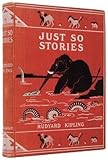
Reading at bedtime at the moment is the Just So Stories of Rudyard Kipling, on my Kindle. I had quite forgotten what a masterclass in storytelling you get from Kipling, and I am now seriously looking forward to the Jungle Book, and after that, the Girl (for 'tis she the audience) should be ready for Kim.

Weird Words #8: Substantive

It will come as no surprise that the meanings of substantive and substantial are very close.

Etymologically they are very closely related:

substantive (adj.)
late 15c., "standing by itself," from O.Fr. substantif, from L.L. substantivum, neut. of L. substantivus "of substance or being," from substantia (see substance). The grammatical term (late 14c.) was introduced by the French to denote the noun in contradistinction to the adjective, from L. nomen substantivum "name or word of substance."

substantial (adj.)
mid-14c., "ample, sizeable," from O.Fr. substantiel (13c.), from L. substantialis "having substance or reality, material," from substantia (see substance). Meaning "existing, having real existence" is from late 14c.

Both words derive from substance:

substance (n.)
c.1300, "essential nature," from O.Fr. substance (12c.), from L. substantia "being, essence, material," from substans, prp. of substare "stand firm, be under or present," from sub "up to, under" + stare "to stand," from PIE root *sta- "to stand" (see stet). A loan-translation of Gk. hypostasis. Meaning "any kind of corporeal matter" is first attested mid-14c. Sense of "the matter of a study, discourse, etc." first recorded late 14c.

So we can differentiate them only through their suffixes, as follows:

-ive
sufix forming adjectives from verbs, meaning "pertaining to, tending to," in some cases from O.Fr. -if, but usually directly from L. -ivus. In some words borrowed from French at an early date it has been reduced to -y (e.g. hasty, tardy).

-al (1)
suffix forming adjectives from nouns or other adjectives, "of, like, related to," Middle English -al, -el, from French or directly from L. -alis (see -al (2)).

The two suffixes are pretty closely related, but in common usage, -al generally suggests a stable state, whereas -ive suggests motion towards or metamorphosis.

As far as I can tell, this analysis helps very little in deciding which of these words to chuse in a given situation. Indeed, most dictionaries list them as virtually interchangeable.

Urban dictionary doesn't list either word.
Webster and Wiktionary list substantial under substantive, either as a synonym or as a meaning, but do not list substantive under substantial.

I suspect that this might corroborate my feeling that substantive is quite often used when substantial ought to be, that is as a vague expression of quantity.

As close as I am able to get to defining a difference between these two words, it is as follows:

Substantial is used when referring to a vague quantity that the speaker things is significant in some way:

"The shop made a substantial profit this year."

Substantive is used when referring to a quality of possessing substance - either concreteness or reality:

"The change of government policy will result in substantive changes in spending." In this example, nothing is being said about the size of the changes in spending; it is stating that there will be real changes.

However, as I have already noted, it is increasingly common to find substantive used in place of substantial. I suspect this may be out of a desire to sound less vague or more educated, or both. In the former aim, it succeeds, simply because less people know the meaning of substantive, and consequently assume it has a more precise meaning than substantial.

Generally, I would advise avoiding both words. Substantial because it is too vague, and substantive because it is both too obscure and too often abused.

"The shop made a satisfactory profit this year." is much more communicative.

"The change of government policy will result in changes in spending." is much more accessible.
2012-10-22

How do I write a story?

Following on from my last post, I've been asking myself how I would go about writing a good story. I have already intimated on this blog that I have written some good stories, and some bad ones. Analysis of my bad stories has revealed the following:

I have a fetish for character creation. Each time I get a cool idea for a new character I go about creating and establishing them. Sometimes my character establishment is much better than the story that it is in. There are a couple of examples here.

The other problem is that I find it all too easy to set up a dramatic event: let's say a sudden confrontation between two characters; the discovery of an accident; a surprise arrival of an unexpected guest. I think of scenes like those very easily and I can write them with as much drama and emotion as is necessary. In my bad stories, I've started with a series of events like those, established some cool characters, and then tried to build a story around them.

I don't know how common this is. But I do know that for me, this doesn't result in a good story.

What does seem to work is when I go looking for the shape of the story first.The shape of a story can be as simple as a line. The story I posted a few days ago, Cosine, looked like this:

I hope that was fairly obvious. The shape of the story came to me before the story itself, but ended up dictating not just the fatal path of the main character, but also his physical path and the path of the arrow of time.

Not all story shapes are so simple. Sometimes they feel as detailed as landscapes; sometimes they seem like polyhedra - though seldom regular.

Once I have a satisfying shape, I can start looking for the people and events that are triggered by the shape, or that fit into it. Sometimes it's Euclidean, and sometimes it really isn't. With some stories I don't even know the genre I'm writing in until I start writing.

The classic story shape, the archetype of archetypes, is the Wheel of Fortune. It is a symbol that you find both explicit and implicit all through Shakespeare, for example.


For many hundreds of years the symbolism of the Wheel of Fortune ruled European stories, and for any given story you can mark the start point and end point on the wheel of each character. Those who were on the way up at the start are on the way down by the end; those who were high are brung low; those who were low raised high.

In the best WoF stories there is a strong interconnexion between the fortunes of all the characters.

Voltaire satirises this simplistic view of storytelling (among other things) in Candide*, where the wheel seems to spin out of control, sometimes in two directions at once.

Sometimes it is fun to try to draw the shape that a given story evokes in your mind. Wool, (books 3 through 5 in particular) with its dominant staircase, and its themes of power and responsibility, of stability and precarity**, inevitably is shaped like a shaft, and the position and direction of characters in the shaft symbolises their status, and their progress through the story, almost whether Hugh wants them to or not.

I'm not altogether clear on what the conclusion of this essay is. I'm aware that some stories seem to appear in the author's mind fully formed; I'm also aware that when it comes to my own stories, I do the best ones when I get the story first, and the characters, events, locations come after. I also know that I write good stories when writing on demand.

When I need a story that illustrates a particular point, anything from philosophy or sociology to spelling and grammar, I can write a strong story. Maybe the conclusion is personal then: that I write good stories when I'm not being self-indulgent. How about you?


__
* required reading
** the proper word is the horribly ugly "precariousness". Please promote my alternative.